Budget 2026-27 CGT Changes: What Happens If You Bought Your Investment Property Before 12 May 2026?
21 Jul 2026
9 minutes
Loading...
Start Today
Join thousands of Australian property investors who save hours every month and never miss a tax deduction.
Have questions? We're here to help you get started.
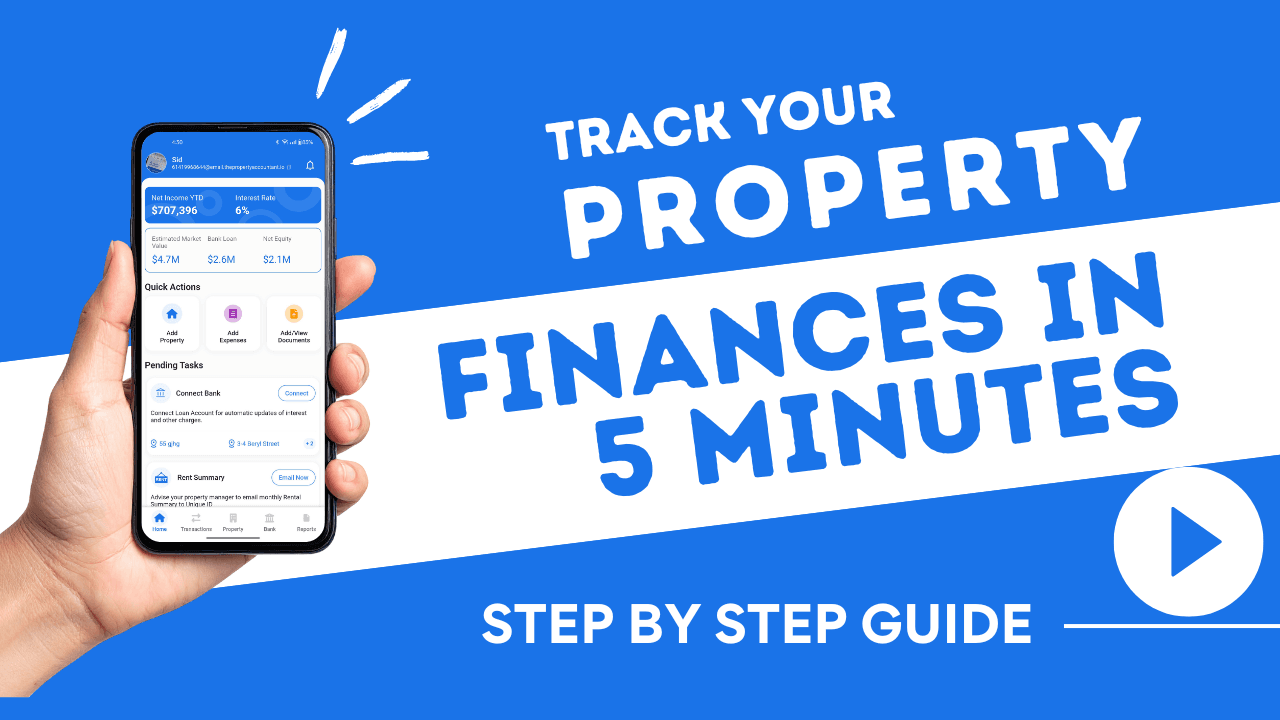
Watch the step-by-step guide and launch your automated workflow.
Capital gains tax on an investment property now depends on two things: whether you bought it before or after the Budget date - 12 May 2026 - and whether it's a new build or an existing home.
Every investment property fits into exactly one of three buckets. Each bucket gives you a choice between Option 1 and Option 2.
| Bucket | When you bought it | Option 1 | Option 2 |
|---|---|---|---|
| A - Bought before the Budget | On or before 12 May 2026 | With a certified valuation: 50% discount on gains up to 30 June 2027. Gains after that date use indexation instead - your cost base grows with inflation, rather than a flat discount. | Without a certified valuation: the ATO splits the gain by time instead, using its own default method. |
| B - New build, bought after the Budget | After 12 May 2026, brand-new home, never lived in before | 50% discount on the whole gain. | Indexation of your costs instead. |
| C - Existing home, bought after the Budget | After 12 May 2026, second-hand home | Indexation of your costs - the only method available. | Not applicable - there's no second option for this bucket. |
This guide focuses on Bucket A - most properties in Australia sit here today.
Most properties sit in this bucket today. Buy on or before 12 May 2026, and part of your gain still gets the 50% discount.
There's one new date to remember: 30 June 2027.
If you owned the property before the Budget, get a certified valuation of what the property was worth on 30 June 2027.
No valuation? The ATO uses its own default method instead - it splits your gain based on time, not on when the value actually grew. That's your only option.
| Bought for | $300,000 | Bought in | 2019 |
|---|---|---|---|
| Value on 30 June 2027 (certified valuation) | $900,000 | Tax rate used | 47% (top marginal rate) |
| Sold for | $1,000,000 | Sold in | 2030 |
Total gain before any adjustment: $700,000.
| With a certified valuation | Without one (ATO default) | |
|---|---|---|
| How the split works | Valuer confirms the property was worth $900,000 on 30 June 2027 | ATO splits by time: 8 of the 11 years owned were before 30 June 2027 |
| Gain before 30 June 2027 | $600,000 | $509,100 |
| Taxable gain before 30 June 2027 (50% discount) | $300,000 | $254,550 |
| Taxable gain after 30 June 2027 (indexation applied) | $16,550 | $115,900 |
| Tax owed at 47% | $148,800 | $174,100 |
With a valuation, this investor calculated both methods and used the valuation-based result, since $148,800 is lower than the ATO's default of $174,100.
Without a valuation, only the default method would have been available - $25,300 extra tax, on the same property, same sale price, same total gain.
The size and direction of this gap depend on the purchase price, the CPI over the holding period, how long the property was held, and where the value really grew.
There's no set answer - you can't know which method is lower until you've run the numbers for that specific property.
| DO | DON'T |
|---|---|
| ✓ Get a certified, in-person valuation as at 30 June 2027 - desktop valuations generally don't give the best value. | ✗ Assume the 50% discount still covers the whole gain after 30 June 2027. |
| ✓ Keep that valuation with your original purchase contract - it's now a permanent cost-base record. | ✗ Confuse the valuation date with when it was obtained - it must value the property as it stood on 30 June 2027. |
| ✓ Calculate the tax both ways once you have a valuation, and use whichever is better for you. | ✗ Assume a valuation is the only option once you have one - the ATO's default is still available and may occasionally be lower. |
| ✓ If you also renovate after 12 May 2026, track that cost separately, with its own start quarter. | ✗ Combine a renovation's cost with the main valuation split - they're worked out separately. |
| ✓ Confirm the valuer values the property "as at" 30 June 2027, not the date they actually visit. | ✗ Move this property into Bucket B or C - the purchase date alone keeps it in Bucket A. |
Getting this right is genuinely risky on the old spreadsheet model - it's simply not built for this.
Get it wrong, and the end result is the same: a lower cost base, and more tax than you actually owe.
The Property Accountant is an all-in-one property accounting and finance platform for investors, tax accountants, and mortgage brokers - tracking rental income, expenses, costs, loans, market value, net equity, and interest rates live, powered by AI.
It automatically updates itself from your settlement statement, depreciation schedule, and monthly rent statement, with bank interest, fees, and charges flowing in through a live bank feed. All you need to add is the expenses and costs you pay directly yourself.
Here's how simple that part is: whenever you incur a cost - a renovation, a repair, a valuation fee, anything - just take a photo or upload the invoice through the mobile app or web portal. Our AI reads the invoice, you check the details, and you save it. That's it.
Everything else - the indexation, the cost tracking, the comparison between the valuation-based method and the ATO's default - happens automatically, in real time. No spreadsheets, no manual calculations, no chasing old invoices months later.
See it in action
Watch how the platform handles document uploads, expense tracking, and automated tax records - end to end.
Ready to see it in action?
Get ahead of the detail. Book a 30-minute demo, and see how The Property Accountant handles CGT.
Book a DemoIf you bought your investment property on or before 12 May 2026, it's in Bucket A, regardless of whether it's a new build or an existing home. The purchase date is the only thing that matters here; renovating the property after 12 May 2026 doesn't move it into Bucket B or C.
You don't have to get a valuation, but it's usually worth it. Without one, you're stuck with the ATO's default method, which splits your gain based on time rather than when the value actually grew, and that can mean paying significantly more tax. With a valuation, you can calculate the tax both ways and use whichever method works out lower for you.
The valuation must value the property "as at" 30 June 2027, not the date the valuer actually visits or signs off on the report. It should also be a certified, in-person valuation rather than a desktop one, since desktop valuations generally don't hold up as well.
The ATO treats this as two separate calculations on the same property: your original gain up to 30 June 2027 (still eligible for the 50% discount), and the gain on the renovation itself, indexed separately starting from the date you actually paid for it. Each cost needs to be tracked with its own start quarter.
Because every cost indexes from the quarter it was spent, not the year or the purchase date, and pre-Budget properties can split into two separate calculations if renovated later. A single missing date can throw off the indexation, the total cost base, and your final tax bill, and spreadsheets have no built-in way to catch that kind of error before it costs you money.