Budget 2026-27 Negative Gearing Quarantine: What Happens to Losses on Existing Homes Bought After 12 May 2026
27 Jul 2026
9 minutes
Loading...
Start Today
Join thousands of Australian property investors who save hours every month and never miss a tax deduction.
Have questions? We're here to help you get started.
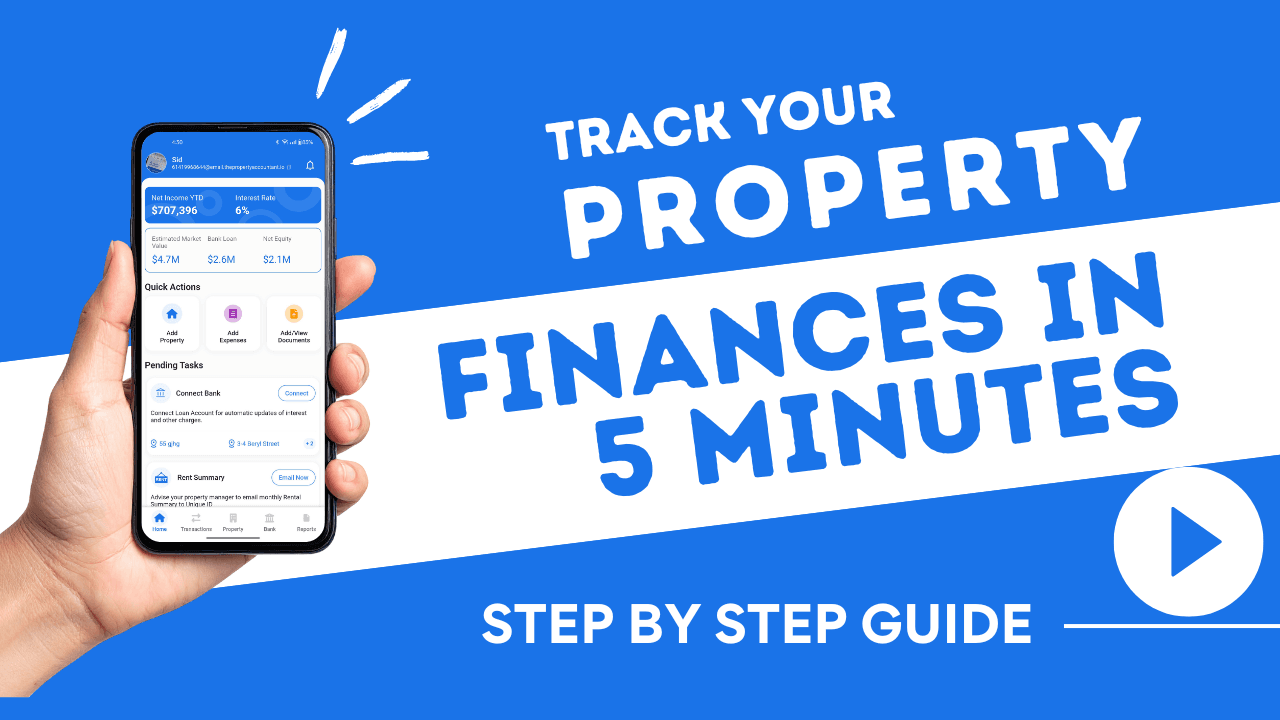
Watch the step-by-step guide and launch your automated workflow.
Negative gearing now depends on two things: when you bought the property, and whether it's a new build or an existing home.
| Bucket | When you bought it | Negative gearing treatment |
|---|---|---|
| A - Grandfathered | Owned, or under contract, before 7:30pm AEST on 12 May 2026 | Nothing changes. Rental losses can still reduce your salary income, exactly as they always have. |
| B - New build | Bought after 12 May 2026, new construction that adds to housing supply | Nothing changes here either. New builds keep full negative gearing - losses can still reduce your salary income. |
| C - Established, bought after the Budget | Bought after 12 May 2026, existing / second-hand home | From 1 July 2027, losses can no longer reduce your salary income. They're quarantined - carried forward for use against future rental profit, or against the capital gain when you sell. |
This guide focuses on Bucket C - existing homes bought after the Budget.
One term to clarify upfront: "second-hand" just means the property has already been bought and sold at least once before - it doesn't need to be old, or lived in for years.
This guide assumes the property is owned in your personal name, as an individual. If you own through a trust, a company, a self-managed super fund, or another structure, these rules can work differently - check with your accountant about how your specific ownership structure is affected.
Buy an existing or second-hand home after 12 May 2026, and from 1 July 2027 your rental losses can no longer reduce your salary income. Instead, they're quarantined - carried forward, year by year, until the property turns a profit or you sell it.
The loss doesn't disappear on its own. But the tax saving is delayed - sometimes for years - and it only survives that long if you declare it correctly, every single year.
The ATO generally only lets you amend a tax return within 2 years of lodging it. Miss declaring a loss in the year it happened, and once that 2-year window closes, the loss for that year may be gone - permanently, even though it was completely real.
| Property | Established, bought October 2026 | Tax rate used | 47% (top marginal rate) |
|---|---|---|---|
| Year 1 loss (2027-28) | $15,000 | Year 2 loss (2028-29) | $14,000 |
| Year 3 loss (2029-30) | $13,000 | Year 4 loss (2030-31) | $10,000 |
| Year 5 loss (2031-32) | $9,000 | Total losses over 5 years | $61,000 |
| Declared every year | Left undeclared until sale | |
|---|---|---|
| Years 1-3 ($42,000) | Kept - declared on time, inside the window | Lost - the 2-year window has closed by the time you try to claim them |
| Years 4-5 ($19,000) | Kept | Kept - still inside the 2-year window |
| Total losses kept | $61,000 | $19,000 |
| Tax value at 47% | $28,670 | $8,930 |
Same property, same losses, same total - but $19,740 less in tax value, just because the losses weren't declared each year as they happened. The loss was real. The deduction was legitimate. It's gone anyway, because the return for that year can no longer be amended. The rule is simple: declare every loss in the year it happens, even if you can't use it yet. That's the only way to protect it.
Declaring a loss on time protects it from the amendment-window problem above. But that's not the end of the story - the ATO can still ask you to prove it, sometimes years later, most often when you sell and finally use the carried-forward balance.
| Property | Established, Bucket C | Carried-forward losses built up | $100,000 over 5 years |
|---|---|---|---|
| Claimed against | Capital gain on sale, Year 6 | Tax rate used | 47% (top marginal rate) |
| Amount | |
|---|---|
| Total carried-forward losses claimed | $100,000 |
| Portion fully supported by invoices and records | $60,000 |
| Portion disallowed - a Year 1 repair with no invoice or receipt | $40,000 |
| Tax value lost at 47% | $18,800 |
If you can't supply the invoices behind a carried-forward loss, the ATO can deny that part of the claim - even if the loss genuinely happened. Declaring it on time protects it from the amendment-window problem. It doesn't protect it from an audit years later if the paperwork isn't there. Both things need to hold up: declared on time, and provable on demand.
Money sitting in an offset account is still your own money - using it isn't borrowing. A redraw is different: it's money you already paid off your loan, borrowed again. If you redraw and use it for an investment property, the interest on that portion becomes deductible from the date you drew it down - but only if you can prove exactly which dollars they were.
| PPOR loan (original) | $500,000 at 6% | Paid down to | $450,000 before the redraw |
|---|---|---|---|
| Redrawn on 1 March 2028 | $50,000 | Used for | Deposit on a Bucket C investment property |
| Tax rate used | 47% (top marginal rate) |
| Correctly split | Not separately traced | |
|---|---|---|
| Interest on the redrawn $50,000 | $3,000/year, deductible - added to the property's quarantined pool | $3,000/year, denied - can't be told apart from the personal loan |
| Interest on the remaining $450,000 (personal) | $27,000/year, not deductible - unchanged | $27,000/year, not deductible - unchanged |
| Tax value at risk, every year | Kept for later use against the property | $1,410/year lost, for as long as the mixing continues |
The redraw only becomes deductible from the date it's drawn down, and only for that exact amount. Without a separate loan split or clear trail marking that specific $50,000 from 1 March 2028, the ATO can treat the whole loan as one blended personal debt and deny the claim - $1,410 lost every year the mixing continues.
| DO | DON'T |
|---|---|
| ✓ (Example 1) Declare every loss in the year it happens - even if you can't use it yet. | ✗ (Example 1) Wait until you sell to "claim it all at once" - by then, several years of the window may already be closed. |
| ✓ (Example 1) Track each property's carried-forward balance separately, with the year each loss arose. | ✗ (Example 1) Assume a quarantined loss carries forward automatically without being declared - it doesn't. |
| ✓ (Example 2) Keep every invoice, rental statement, and loan document for as long as the loss sits in your carry-forward pool. | ✗ (Example 2) Assume a spreadsheet number is enough evidence if the ATO asks - it isn't; they ask for the underlying documents. |
| ✓ (Example 3) Set up a separate loan split the moment you redraw for investment purposes - mark the exact date and amount. | ✗ (Example 3) Confuse using offset funds with redrawing - only a genuine redraw of previously repaid principal creates new deductible debt. |
Getting this right is genuinely risky on the old spreadsheet model, with supporting documents scattered across drives and emails - it's simply not built for this.
Get it wrong, and the result is the same either way: money you were legitimately entitled to keep, gone for good.
The Property Accountant is an all-in-one property accounting and finance platform for investors, tax accountants, and mortgage brokers - tracking rental income, expenses, costs, loans, market value, net equity, and interest rates live, powered by AI.
It automatically updates itself from your settlement statement, depreciation schedule, and monthly rent statement, with bank interest, fees, and charges flowing in through a live bank feed. All you need to add is the expenses and costs you pay directly yourself.
Everything else happens automatically, in real time: each year's quarantined balance is tracked on its own timeline, and every supporting document is stored against the year it relates to.
See it in action
Watch how the platform handles document uploads, expense tracking, and automated tax records - end to end.
Ready to see it in action?
Get ahead of the detail. Book a 30-minute demo, and see how The Property Accountant handles negative gearing.
Book a DemoIt means the loss can no longer reduce your salary income in the year it happens. Instead, it's carried forward and set aside, to be used against future rental profit from the property or against the capital gain when you sell it.
Yes, it matters a great deal. The ATO generally only allows amendments within 2 years of lodging a return, so if you don't declare a loss in the year it happened and wait until sale to "claim it all at once," several years' worth of losses may already be permanently gone by the time you try.
No, that protects it from the amendment-window problem, but not from an audit. When you eventually claim the carried-forward balance, the ATO can still ask for the underlying invoices and records, and any portion without proper documentation can be disallowed, even if the loss genuinely happened.
No. Money sitting in an offset account is still your own money, so using it isn't borrowing. A redraw is different, it's money you already paid off your loan, borrowed again, and it only becomes deductible from the date you drew it down, for that exact amount.
The ATO can treat the whole loan as one blended personal debt and deny the claim entirely. Without a separate loan split marking the exact date and amount of the redraw, you risk losing the deduction on that portion every year the mixing continues.