Turned Your Investment Property Into Your Home? You could pay thousands more in tax when you sell - unless you keep the right records.
7 Sep 2026
9 minutes
Loading...
Start Today
Join thousands of Australian property investors who save hours every month and never miss a tax deduction.
Have questions? We're here to help you get started.
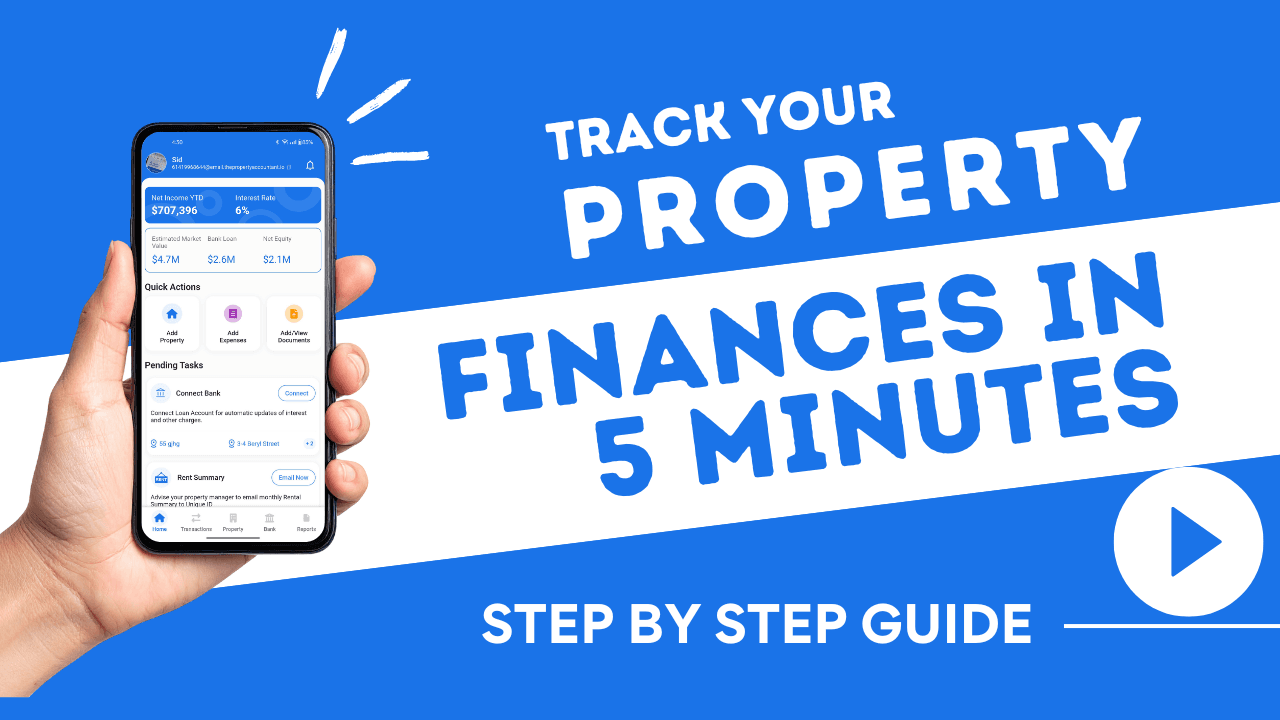
Watch the step-by-step guide and launch your automated workflow.
A simple guide for Australians who bought a property as an investment and later moved into it as their home.
A rental can become your home for all sorts of reasons. The tenants leave, your plans change, or you simply decide it is time to move in. The move itself is straightforward. The tax records are not quite as obvious.
The key point is simple: once the property becomes your home, some costs that are no longer deductible can still matter later when you sell. If you stop keeping the records, you may lose part of your cost base and pay more tax than necessary.
This article covers one direction only:
Investment property first → owner-occupied home later. If the property was your home first and you later rented it out, a different market-value rule may apply.
When a property starts as an investment and later becomes your main residence, the taxable capital gain is generally worked out using a pro-rata, or time-apportionment, method.
Moving in does not let you reset the cost base to a new market valuation. Instead, the calculation looks at the periods the property was and was not covered by the main-residence exemption.
Important distinction
If the property was your main residence first and was later used to produce income, the ATO's "home first used to produce income" market-value rule can apply. That is the reverse situation, and different tax rules apply.
A simplified way to think about the calculation is:
Simplified formula
Capital gain × (non-main-residence days ÷ total ownership days)
CGT rules changed in 2026
This is the part many owners miss. Once you live in the property and it stops earning rent, some ownership costs are no longer deductible as expenses. But that does not automatically make them irrelevant for tax.
For properties acquired after 20 August 1991, eligible non-deductible ownership costs can generally be added to the cost base. This can reduce a future capital gain.
| Costs while you live there | Why it can matter |
|---|---|
| Mortgage interest | Non-deductible interest on borrowings used to acquire the property can form part of the cost base. |
| Council and water rates | Eligible rates and similar ownership charges can form part of the cost base. |
| Home insurance | Insurance premiums can be an ownership cost. |
| Repairs and maintenance | Eligible non-deductible repair and maintenance costs can be included. |
| Capital improvements | Capital expenditure that increases or preserves the property's value can also form part of the cost base. |
When a property is rented, owners naturally keep statements and invoices because the expenses are claimed as deductions at tax time. After they move in, that habit often stops because the property is no longer producing rent.
But the costs continue: interest, rates, insurance, repairs and improvements. Those records may still matter when the property is sold. The tax benefit has simply moved from an annual deduction to the cost base.
If you cannot support an amount with appropriate evidence or records, you may not be able to include it in the cost base. Keeping the records as you go is much easier than trying to reconstruct five or ten years of history at sale time.
Both examples assume the property was an investment first and later became the owner's home. There are no capital improvements.
Assume the following eligible, non-deductible ownership costs are paid each year while the owner lives there:
| Owner-occupied cost | Per year |
|---|---|
| Mortgage interest | $40,000 |
| Council rates | $2,800 |
| Water rates | $900 |
| Insurance | $1,300 |
| Repairs and maintenance | $2,000 |
| Total | $47,000 |
The property is owned for 10 years in total: 5 years as a rental and 5 years as the owner's home. During the 5 owner-occupied years, $235,000 of eligible non-deductible ownership costs is added to the cost base ($47,000 × 5).
Because 5 of the 10 ownership years relate to the taxable rental period, the $235,000 reduces the taxable gain by $117,500 before the CGT discount ($235,000 × 5/10). Assuming the owner is an individual, held the property for more than 12 months and qualifies for the 50% CGT discount, that becomes a $58,750 reduction in the discounted taxable capital gain. At a 47% marginal tax rate, that is about $27,613 less tax.
The first 10 years are the same as Example 1. The difference is that the owner keeps living in the property for another four years after 1 July 2027.
| When | What happens |
|---|---|
| Years 1-5 | Property is rented. Rental-period expenses are dealt with under the normal investment-property rules. |
| Years 6-10 | Owner moves in. $235,000 of eligible non-deductible holding costs is recorded over the 5 years. |
| 1 July 2027 transition | Get a defensible transition valuation. Technically, the market-value method uses the property's market value immediately before 1 July 2027. The law also allows a prescribed apportioning method. |
| Years 11-14 | Owner continues living there and records another $188,000 of eligible holding costs ($47,000 x 4). |
| Sale after Year 14 | The tax accountant applies the main-residence rules and compares the permitted transition methods using the records available. |
Because the property remains the owner's main residence for all four post-2027 years, the post-2027 capital gain is generally covered by the main-residence exemption. So, in this exact fact pattern, the extra $188,000 does not produce an additional post-2027 CGT saving.
The records are still essential. They form part of the property's cost-base history, must be taken into account if the apportioning method is chosen, or become directly relevant if the property is later rented again, or used partly to produce income or only qualifies for a partial main-residence exemption.
| Keep | Why |
|---|---|
| 1 July 2027 transition valuation | Preserves the market-value method and gives your accountant evidence to compare against the apportioning method later. |
| Post-1 July 2027 cost records | Keeps the post-2027 cost base complete and is essential if the apportioning method is chosen or the property's use later changes. |
| Exact change-of-use dates | Shows which periods were investment use and which periods may qualify for the main-residence exemption. |
Simple takeaway
Around 1 July 2027, do both: get a defensible transition valuation and keep recording eligible property costs. The valuation preserves one method; the records preserve the other and keep the property history complete.
The aim is to keep the property history, supporting records and valuation evidence organised while the property changes use.
The result is less record chasing later, better evidence around the 1 July 2027 transition, and a clearer history for your tax accountant to minimize your tax bills.
See it in action
Watch how the platform handles document uploads, expense tracking, and automated tax records - end to end.
Generally, no. Moving into a property that was an investment first does not itself reset the cost base to market value. The original cost base continues, with eligible costs added over time.
If you hold an eligible property across the transition and want to preserve the market-value method, keep a defensible 1 July 2027 transition valuation. Technically, the legislation refers to market value immediately before 1 July 2027. Keeping the valuation also lets your accountant compare it with the apportioning method later.
It is an alternative transition method allowed under the new CGT rules. Instead of relying on the 1 July 2027 market-value reset, a prescribed formula apportions the gain. The method must take post-1 July 2027 cost-base expenditure into account.
Yes. This is one of the key reasons to keep recording interest, rates, insurance, repairs and other eligible costs after 1 July 2027. Post-2027 cost-base expenditure must be considered under the prescribed apportioning method.
No. These are generally third-element ownership costs. Where eligible, they can still form part of the cost base, but the new indexation rules do not index the third element.
That is a different situation. If the ATO's "home first used to produce income" conditions are met, a separate market-value rule can apply when the property first starts producing income.
No. Third-element ownership costs can reduce a capital gain, but they cannot be used to create or increase a capital loss.
Keep the exact change-of-use date and continue keeping records. A new income-producing period begins, and the main-residence treatment may become only partial, making the post-2027 cost history directly relevant.
Keep the 1 July 2027 transition valuation, change-of-use dates, loan statements, council and water rates, insurance records, and invoices and receipts for repairs and maintenance. Keep any capital-improvement records separately as well.
Disclaimer: This article provides general information only and does not constitute tax, legal or financial advice. Property and CGT outcomes depend on your individual circumstances, including how and when the property was used, the costs incurred and the date of sale. Please confirm the treatment with your registered tax agent or tax accountant before acting on this information.