
Bought an investment property before 12 May 2026?
5 Oct 2026
4 minutes
Loading...
Start Today
Join thousands of Australian property investors who save hours every month and never miss a tax deduction.
Have questions? We're here to help you get started.
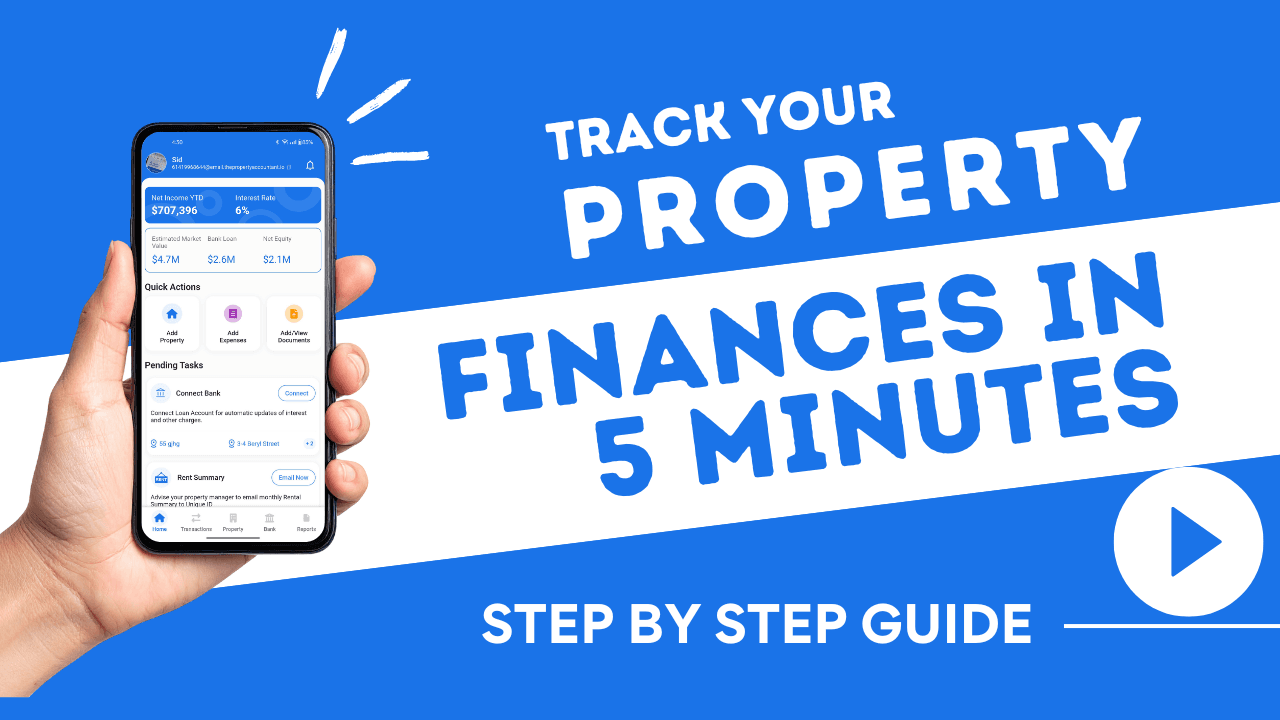
Watch the step-by-step guide and launch your automated workflow.
What 1 July 2027 could mean for your property valuation, CGT calculation and future tax records
Quick answer: If you hold an investment property across 1 July 2027, the value at that date can matter when you eventually sell. A certified valuation gives you a value that can be compared with the Government's specified apportionment method.
The 2026 Federal Budget changed how capital gains will be taxed from 1 July 2027. For assets held across the transition, the 50% CGT discount continues to apply to gains accrued before that date, while gains accruing from 1 July 2027 move to cost-base indexation and a 30% minimum tax rate.
For assets held before 1 July 2027 and sold later, the Government says taxpayers can either obtain a valuation at the transition date or use a specified apportionment formula to work out the value at that date.
So, if you bought an investment property before 12 May 2026 and still own it at 1 July 2027, that date could become very important when you eventually sell.
Ideally, yes. If you bought your investment property before 12 May 2026 and still own it at 1 July 2027, having a valuation at that date gives you a professionally supported value that may be important when you eventually sell.
Because it gives you the ability to compare two methods.
Certified Valuation Method
Uses a professionally supported market value for your property at 1 July 2027.
ATO Default Method
Uses the Government's specified apportionment formula to estimate the property's value at the transition date.
Depending on your property's growth, purchase price, cost base and holding period, the two methods can produce different outcomes. Without a valuation, you cannot compare a valuation-based calculation with the default method.
That could potentially mean more tax when you eventually sell.
You can choose between a desktop valuation and an in-person valuation.
For an in-person valuation, the valuer needs to inspect the property around the valuation date. Leave it too late and you may need to rely on a retrospective desktop valuation instead.
Organising it early also helps you avoid the last-minute rush and potentially higher valuation costs as 1 July 2027 approaches.
It is free to request your quotes. You only pay once you choose a valuer.
Getting the valuation report is only the first step. You may not sell the property for years, so the 1 July 2027 value needs to stay connected with the rest of your property records.
That can include:
The Property Accountant keeps the valuation report with the property record, alongside the financial and tax information already being maintained for that property. That means the history is there when you and your accountant need it.
When the property is eventually sold, TPA can bring the relevant records together and compare the valuation method with the ATO default method, helping you and your accountant see the difference between the two calculations and determine the appropriate tax outcome under the rules that apply at the time.
The valuation gives you the 1 July 2027 number. TPA helps keep that number, the supporting records and the two-method comparison together.
Start by getting 3 quotes from registered valuers directly from your TPA portfolio. It is free to request quotes and there is no payment until you approve a valuer.
General information only. Tax outcomes depend on your circumstances and the law applying at the time of sale. Consider advice from your registered tax adviser.
Ideally, yes if you hold an investment property across 1 July 2027. A valuation gives you a professionally supported value that can later be compared with the Government's specified apportionment method.
The Government's 2026 tax reforms split gains accruing before and after 1 July 2027. For assets held across the transition, the property's value at that date helps determine the split.
One method uses a certified valuation at 1 July 2027. The other uses the Government's specified apportionment formula to estimate the value at the transition date.
An in-person valuation requires an inspection around the valuation date. Organising early can help avoid the last-minute rush and may reduce the risk of limited availability or higher valuation costs as the date approaches.
TPA stores the valuation with the property record, keeps it alongside relevant property tax records, and can compare the valuation method with the ATO default method when the property is eventually sold.