Best Accounting Software for Investment Properties Australia (2026 Guide)
27 Apr 2026
10 minutes
Loading...
Start Today
Join thousands of Australian property investors who save hours every month and never miss a tax deduction.
Have questions? We're here to help you get started.
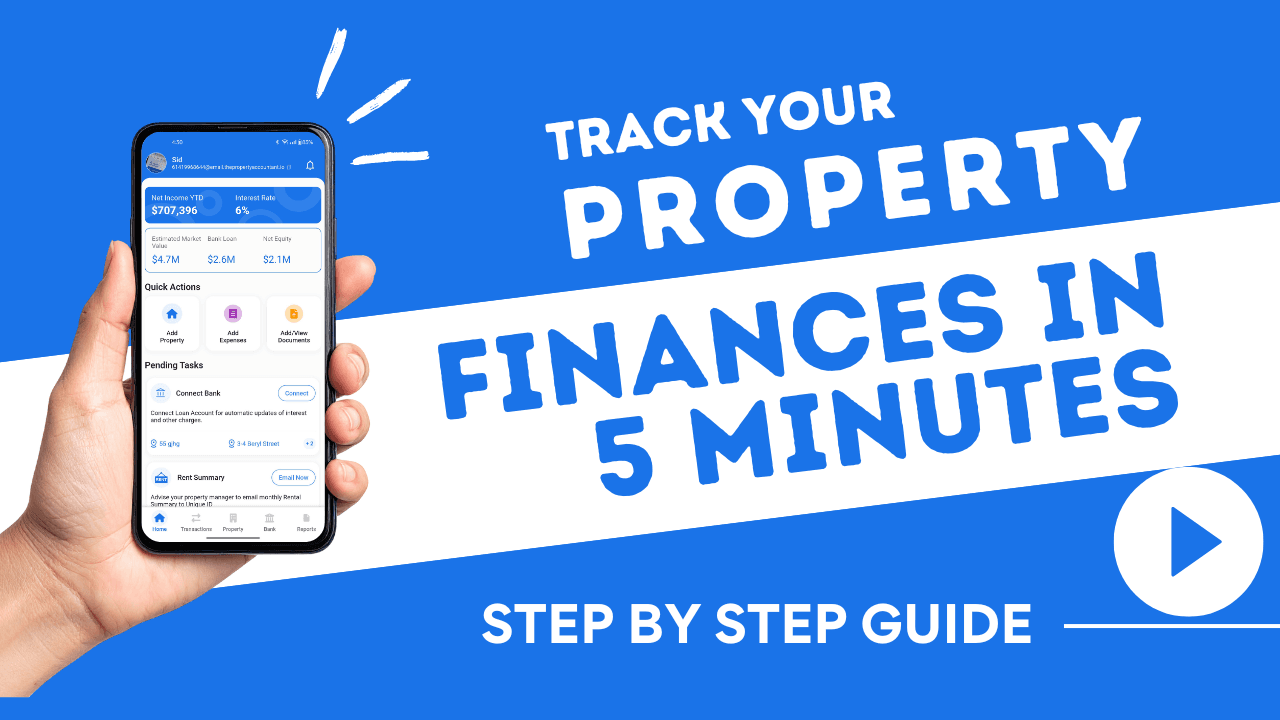
Watch the step-by-step guide and launch your automated workflow.
Australia's property investment ecosystem is becoming increasingly data-driven. With evolving tax regulations, rising interest rates, and complex lending structures, investors need more than basic tools to stay competitive.
Modern investors are adopting advanced accounting software for real estate investors to automate financial workflows, reduce risk, and unlock strategic insights.
However, not all tools are built equally. While many platforms offer general accounting features, only a few truly align with the needs of property investors. This guide explores the best accounting software for rental property, starting with a solution designed specifically for investors, followed by a transparent breakdown of competitor limitations.
Managing investment properties involves more than tracking income and expenses.
Offset accounts, redraw facilities, and multiple loans (i.e. one loan funds used across multiple properties and one property uses funds from multiple loans) require precise tracking to ensure correct interest deductions.
As portfolios grow, manual tracking becomes inefficient and error-prone.
Australian tax regulations demand structured and accurate reporting.
Investors need real-time insights to optimize cash flow and long-term returns.
This is where specialized bookkeeping software for rental property becomes essential.
When selecting the best bookkeeping software for real estate investors , focus on:
The Property Accountant positions itself as a purpose-built solution for property investors, combining technology with expert advisory.
Best For: Investors who want a complete, done-for-you system
Key Advantages:
Strategic Positioning:
Unlike traditional platforms, this solution removes the operational burden and shifts focus toward growth, strategy, and tax efficiency.
Xero is a widely used cloud accounting platform.
Best For: Investors looking for flexibility and integrations
Pros:
Cons:
MYOB is a traditional accounting solution with strong Australian roots.
Best For: Compliance-focused investors
Pros:
Cons:
QuickBooks Online is known for its simplicity and accessibility.
Best For: Beginners entering property investment
Pros:
Cons:
PropertyMe focuses on property management with integrated accounting features.
Best For: Investors working with property managers
Pros:
Cons:
| Software | Best For | Key Strength | Key Limitation |
|---|---|---|---|
| The Property Accountant | Full-service investors | Software + expert advisory | Premium model |
| Xero | Scalable investors | Integrations & automation | Not property-specific |
| MYOB | Compliance-focused users | Local tax features | Limited flexibility |
| QuickBooks Online | Beginners | Ease of use | Poor scalability |
| PropertyMe | Managed portfolios | Property management | Weak accounting depth |
Choosing the best accounting software for real estate investors requires aligning your selection with your investment strategy.
Small portfolios benefit from simple tools, while larger portfolios require advanced automation.
Beginners should prioritize ease of use, while experienced investors need deeper analytics.
If you work with property managers or accountants, seamless integration is critical.
Your software should scale with your portfolio, avoiding costly migrations later.
Australian tax regulations demand accuracy, making compliance features essential.
An investor managing four rental properties faced challenges tracking loan interest across multiple accounts. Using generic tools, they struggled with inconsistent reporting and missed deductions.
After transitioning to a structured accounting software for property investors, supported by expert advisory, the results were transformative:
Outcome:
Increased cash flow visibility and improved long-term profitability
The next wave of accounting software for investment properties is being shaped by innovation and automation.
Software is moving beyond bookkeeping to predictive analytics, helping investors forecast cash flow and tax outcomes.
Dynamic systems will adjust financial strategies based on live data.
Accounting, property management, and financial planning tools are merging into unified platforms.
From bank feeds to reporting, automation will eliminate manual processes entirely.
Investors who adopt these innovations early will gain a significant competitive advantage.