
How Missing Loan Interest Tracking Could Cost You Thousands in Tax Later
21 Apr 2026
8 minutes
Loading...
Start Today
Join thousands of Australian property investors who save hours every month and never miss a tax deduction.
Have questions? We're here to help you get started.
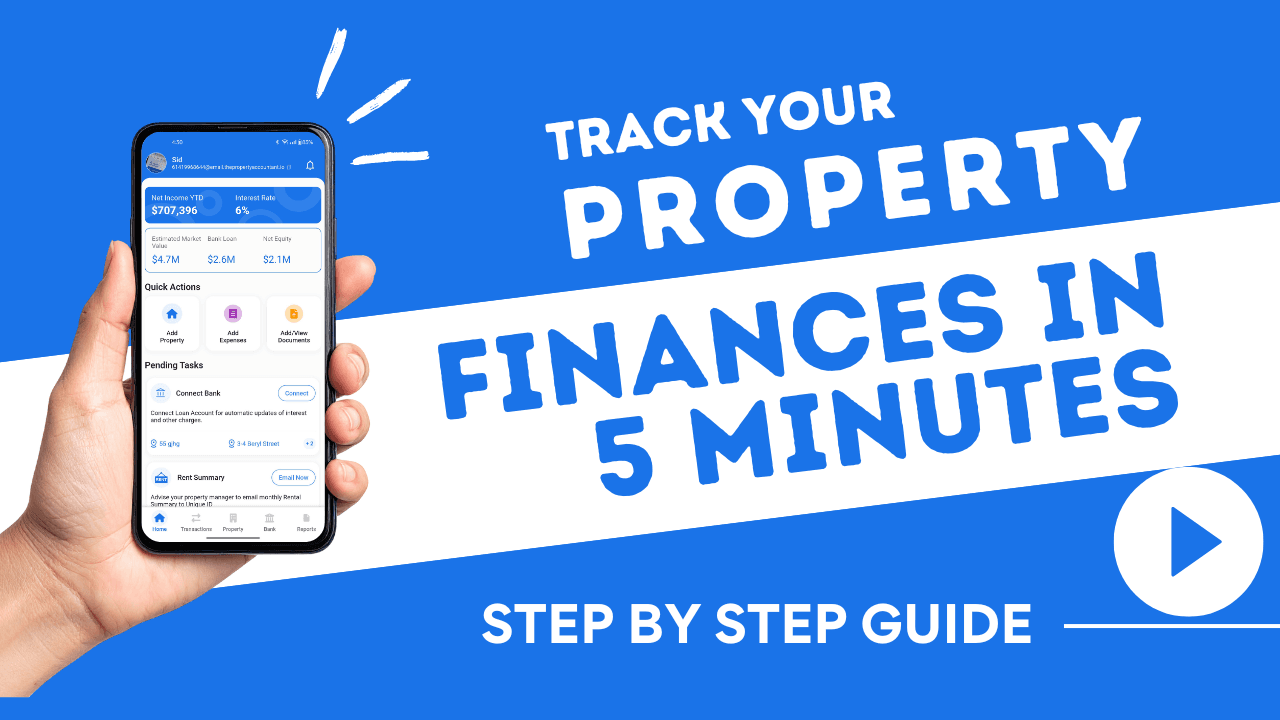
Watch the step-by-step guide and launch your automated workflow.
Many property investors assume that loan interest only becomes important once the property is rented. That sounds harmless, but it can become expensive.
During construction, you may be paying interest every month on the land and on the build. If those amounts are not separated and tracked correctly, you can miss current-year deductions, weaken your future cost base, or make life much harder for your accountant when the property is eventually sold.
In simple terms, this blog explains what happens to interest during construction, where the hidden value sits, the common mistakes investors make, and how a clean tracking process can save real money.
A common construction project has two moving parts:
These may sit under one overall facility or under separate splits, but from a tax-tracking point of view, they should not be treated as one single bucket.
| Loan Type | Example Amount | Rate | Example Interest | Simple Tax View |
|---|---|---|---|---|
| Land | $500,000 | 6% | $60,000 over 2 years | Generally not claimed immediately during construction. Often tracked as part of the cost base for later CGT purposes. |
| Construction | $1,000,000 | 6% | $60,000 per year | May be deductible where the borrowing is directly linked to building an income-producing rental property, subject to the facts. |
The key idea is simple: the interest on land and the interest on construction are not always treated in the same way during the build phase.
Once the property is completed and genuinely rented or available for rent, the general tax position becomes much easier to follow. The complication sits mainly in the construction period.
The interest you pay on the construction component of your loan can often be a powerful tool for reducing your current tax bill.
If the borrowings are directly linked to building a property that is intended to produce rental income, that interest may be deductible as you incur it - even before a tenant moves in. By correctly identifying and claiming this “construction-side” interest, you can:
The key to unlocking this benefit is separation. If your land and construction loans are lumped together, it becomes difficult to prove to the ATO which portion of the interest relates to the “deductible” build versus the “cost base” land. The best way to show clear tracking is to keep the land loan and construction loan as two separate loan splits.
The biggest mistake is mixing everything and trying to sort it out much later.
This usually happens in one of four ways:
By the time the property is sold, the missing detail may be impossible to rebuild cleanly. That is where investors lose deductions, cost base amounts, or both.
Here are two simple numerical examples that show how poor tracking can hurt.
| Scenario | Amount Missed | Tax Rate | Possible Impact |
|---|---|---|---|
| Land interest not tracked into cost base | $60,000 | 25% | $15,000 more tax on sale |
| Construction interest that could have been claimed | $60,000 | 40% | $24,000 missed tax saving |
| Combined effect in a bad record-keeping case | $120,000 | Example only | A very costly outcome |
These examples are simplified, but the message is clear: small monthly interest entries can turn into large tax amounts when ignored for long enough.
The solution is not more spreadsheets. The solution is better classification from the start.
A good tracking process should do five things well:
This is where a platform like The Property Accountant helps practically. It is not about making the process look fancy. It is about making sure the right numbers are captured, classified, and available when needed.
Compared with a manual spreadsheet, the big advantage is consistency. The data does not depend on memory, scattered emails, or someone rebuilding years of interest later. Check How This Works in Practice:
When interest is tracked properly from day one, several good things happen:
In short, the money you have already spent starts working for you instead of disappearing into poor record-keeping.
If you remember only five things, remember these:
For readers who want to go deeper, these ATO resources are useful starting points: