Why You Could Be Paying Thousands More in Tax Every Year
21 Apr 2026
7 minutes
Loading...
Start Today
Join thousands of Australian property investors who save hours every month and never miss a tax deduction.
Have questions? We're here to help you get started.
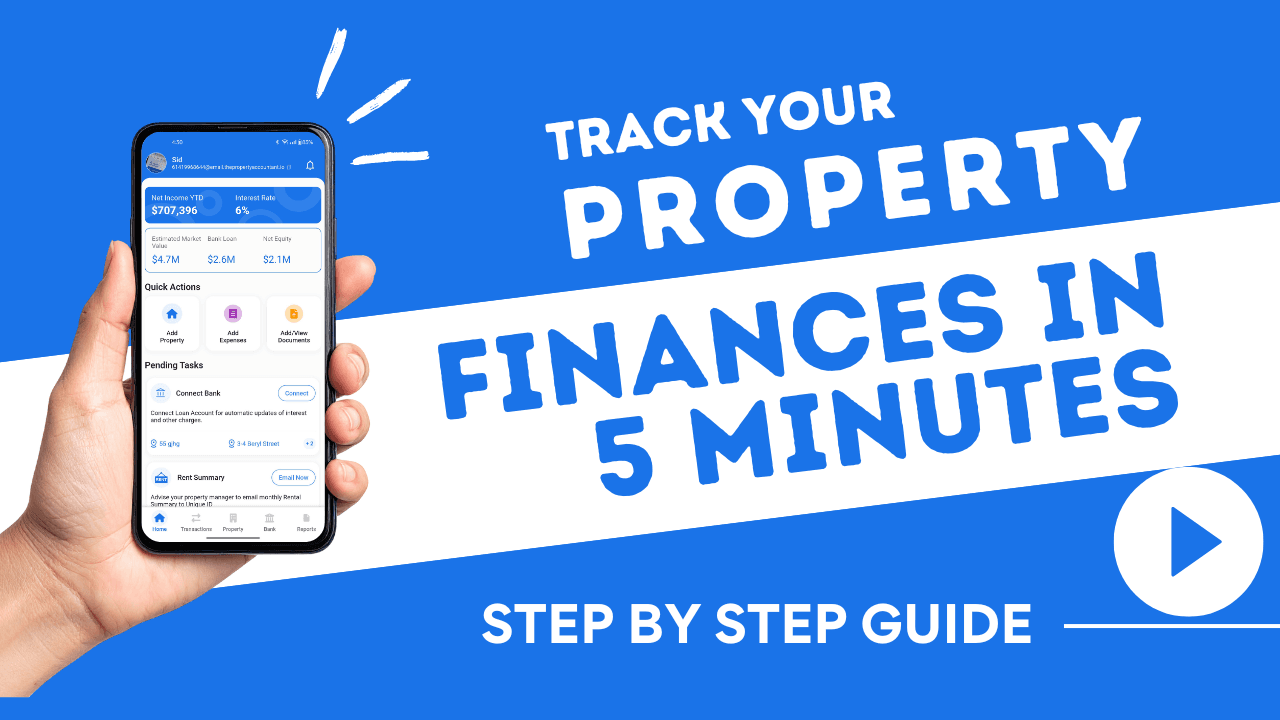
Watch the step-by-step guide and launch your automated workflow.
This issue is more common than most property investors realise.
I bought an investment property for $1,000,000. The bank gave me an $800,000 investment loan. To cover the balance, stamp duty and other purchase costs, I redrew $250,000 from my owner-occupied home loan.
At year's end, I had two summaries in front of me: one for the investment loan and one for the owner-occupied home loan. Like many investors, I naturally assumed that only the interest on the investment loan mattered for tax purposes.
That is where many people get caught. The tax outcome is not determined by the property used as security. It is determined by what the borrowed funds were actually used for.
At tax time, many investors simply send their accountant the annual loan summaries, interest charged, account numbers, and the property details. That sounds reasonable, but it can miss a key point.
If part of the owner-occupied home loan was redrawn and used for the investment property, that portion may need to be considered for interest deductibility as well.
The trouble is that the year-end summary usually shows only totals. It does not clearly show where each borrowed dollar actually went. So the investor may tell the accountant to focus only on the investment loan and ignore the home loan summary completely.
That can mean the deductible portion of the redraw is never properly identified.
In simple words, the key question is not: “Which property secured the loan?”
The real question is: “What was the borrowed money used for?”
If borrowed funds are used for an income-producing investment purpose, the interest on that part can potentially be deductible. If borrowed funds are used for private purposes, the interest is generally private. If one loan is used for both, the interest usually needs to be split between the two uses.
That is why an owner-occupied loan can still contain an investment-related portion, and why the loan label on its own is not enough.
The most common mistake is assuming the investment loan summary tells the whole story.
An investor may say: “This is my investment loan. This is my home loan. The home loan is private, so please ignore it.” But if part of that home loan redraw was actually used for the investment property, that assumption can lead to missed deductions.
This usually does not happen because everyone is careless. It happens because the usage of funds was never tracked clearly enough at the time the money moved.
Let us use the same example and keep the numbers simple:
| Item | Amount / Detail |
|---|---|
| Investment property purchase price | $1,000,000 |
| Bank investment loan | $800,000 |
| Redraw from owner-occupied home loan | $250,000 |
| Example interest rate on redraw portion | 6% |
| Annual interest on $250,000 redraw | $15,000 |
| Example tax rate | 40% |
| Potential annual tax benefit if claimed | $6,000 |
What this means:
If the owner-occupied redraw used for the investment purchase is ignored, the investor could miss around $6,000 in deductions-related tax benefits each year. Over 5 years, that is $30,000.
The solution is to track the purpose of the borrowing, not just the name of the loan.
This is exactly where The Property Accountant makes things much easier.

See how investors link loans based on how the funds were actually used
In real life, property investors do not always have one clean loan for one clean property. Sometimes one investment property is funded by more than one loan. In other cases, one loan may be used across multiple properties. That is where things become confusing, and where interest deductions are often missed.
With The Property Accountant, you can link loans based on how the funds were actually used.
For one investment property, you may have an investment loan and an owner-occupied loan redraw used for deposit, stamp duty or other property costs. Both loans can be linked to the same investment property, with the investment loan at 100% and the owner-occupied loan linked only to the portion of funds used for that investment, so the full funding picture is captured in one place.
Add one loan to multiple properties
Sometimes one loan is used across more than one property. Instead of trying to work this out manually every year, you can simply update the percentage of that loan linked to each property based on how the funds were used.
Once the loan setup is in place, interest, bank fees, and loan charges can be automatically allocated to the correct property or properties based on the linked percentages. This helps make sure the right amounts go to the right property, deductible amounts are not missed, records stay cleaner at year's end, and the accountant has better information to work with.
Most importantly, the platform is built around use of funds, not just loan security. So instead of trying to remember everything at tax time, the loan allocation is already set up properly in the system. That means less manual work, less confusion, and less chance of missing deductions.

See how investors are tracking loan interest and capturing every deduction automatically:
When the borrowing purpose is tracked properly, the investor gives the accountant much better information.
That means fewer missed deductions, cleaner records, and a better chance of getting the correct tax outcome. Instead of hoping the loan summary speaks for itself, the investor can clearly show how the borrowed funds were used.
For readers who want to learn more, the most relevant ATO materials are the guidance on rental property interest expenses and Taxation Ruling TR 95/25. These resources explain the key principle that interest deductibility turns on the use and purpose of the borrowed funds.
You may also want your tax adviser to review any mixed-use loan, redraw, or offset arrangement before lodgment.