What Is Capital Gains Tax and How Does It Work? A CGT Guide.
01 Dec 2025
18 minutes
Loading...
Start Today
Join thousands of Australian property investors who save hours every month and never miss a tax deduction.
Have questions? We're here to help you get started.
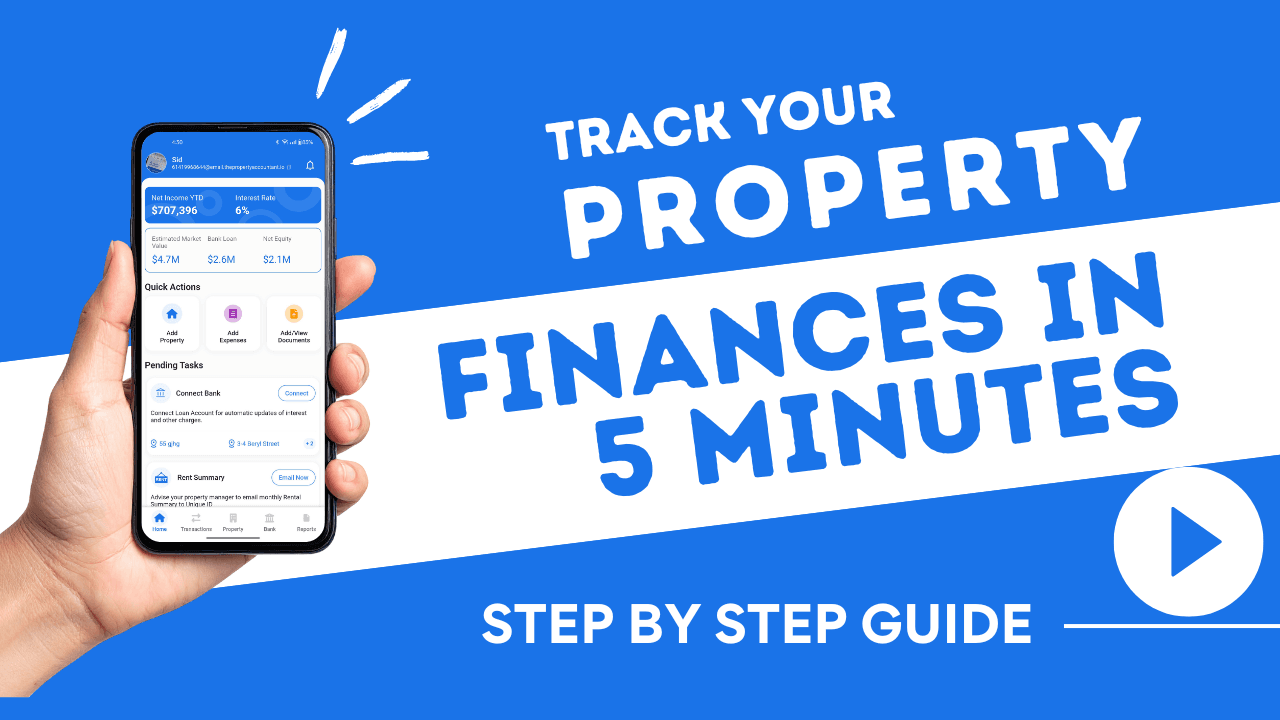
Watch the step-by-step guide and launch your automated workflow.
Are you sitting on a property goldmine but worried about the tax implications when you sell? You're not alone. Capital Gains Tax (CGT) is one of the most misunderstood aspects of property investment, yet it can significantly impact your bottom line.
As property investors across Australia grapple with rising interest rates and shifting market conditions, understanding CGT has never been more crucial. Whether you're a seasoned investor with multiple properties or someone considering their first investment property sale, this guide will help you navigate the complex world of capital gains tax and learn how to reduce capital gains tax on investment property in Australia.
Let's start with the basics. Capital Gains Tax isn't actually a separate tax - it's part of your regular income tax. When you sell an investment property for more than you paid for it, the profit (or capital gain) is added to your assessable income for that financial year.
If you bought an investment property for $500,000 and sold it for $700,000, your capital gain would be $200,000. However - and this is where it gets interesting - this doesn't mean you'll pay tax on the full $200,000.
One of the most valuable benefits available to Australian property investors is the 50% CGT discount. If you've held your investment property for more than 12 months, you only pay tax on half of your capital gain.
| Capital gain: | $200,000 |
| Less 50% CGT discount: | -$100,000 |
| Taxable capital gain: | $100,000 |
This discount alone can save investors thousands of dollars, making the difference between a profitable sale and a financial headache.
💡 Important Note:
This discount is available to individuals and trusts, but not companies.
Here's where many property investors leave money on the table. Your capital gain isn't simply the difference between your purchase price and sale price. The Australian Taxation Office allows you to include various costs in your "cost base," effectively reducing your taxable capital gain.
Original purchase price
Stamp duty and transfer fees
Legal fees and conveyancing costs
Building and pest inspection fees
Certain renovation and improvement costs
Selling costs (agent fees, advertising, legal fees)
Loan establishment costs
💡 Key Insight:
Many investors focus solely on the sale price and forget about these deductible costs. It's like leaving money on the table, money that rightfully belongs in your pocket, not the tax office's.
Not all property-related expenses are treated equally for tax purposes. Some costs can be claimed immediately as tax deductions (revenue items), while others must be added to your cost base and can only reduce your CGT when you sell (capital items).
| Immediate Deductions (Revenue Items) | Capital Items (Added to Cost Base) |
|---|---|
| Rental property maintenance and repairs | Property improvements and renovations |
| Property management fees | Extensions and additions |
| Council rates and land tax | Initial repairs to bring property to rentable condition |
| Insurance premiums | Structural improvements |
Understanding this distinction is crucial because it affects both your annual tax returns and your eventual CGT liability.
The biggest mistake we see is investors who can't substantiate their cost base because they haven't kept adequate records. Every receipt, every invoice, every payment related to your property could potentially reduce your CGT.
Claiming capital improvements as immediate deductions might give you a bigger tax refund today, but it could cost you significantly more in CGT when you sell.
Selling one day before the 12-month mark means you miss out on the 50% CGT discount entirely. We've seen investors lose tens of thousands of dollars because of poor timing.
Some investors make property decisions without considering the CGT implications, potentially turning a profitable investment into a tax nightmare.
There are several situations where you might not need to pay CGT:
Your main home is generally exempt from CGT
Pre-CGT assets are exempt
May apply in certain circumstances
Can be used to offset capital gains
If you've lived in your property as your main residence for any period, you might be eligible for a partial main residence exemption. This can significantly reduce your CGT liability, even on investment properties that were once your home.
💡 The 6-Year Rule:
Under the ATO's 6-year rule, even if you move out and rent your property, you may still treat it as your main residence for up to 6 years, giving you a significant CGT advantage.
When it comes to property investing, few things create as much confusion and stress as Capital Gains Tax (CGT). Selling a property without the right records and planning can mean paying thousands more in tax than necessary. That's where The Property Accountant steps in, helping you track, manage, and optimise your CGT position with ease.
✅ With The Property Accountant, your CGT position is no longer a guessing game. It's a clear, accurate, and optimised strategy helping you keep more of your gains where they belong: in your pocket.
Recently, we worked with Sarah, a property investor from Melbourne, who was planning to sell an investment property she'd owned for 18 months. Her initial calculations showed a capital gain of $150,000.
Identified $15,000 in additional cost base items she'd forgotten
Correctly classified $8,000 in renovation costs as capital improvements
Utilised carried-forward capital losses of $12,000
Sarah's taxable capital gain reduced from $150,000 to $57,500.
A tax saving of over $18,000 at her marginal tax rate.
Capital Gains Tax doesn't have to be a source of stress or unexpected expenses. With proper planning and professional guidance, you can minimise your CGT liability while maximising your property investment returns.
Whether you're planning to sell in the near future or want to ensure you're properly positioned for future sales, The Property Accountant is here to help. Our specialised knowledge of property taxation, combined with our commitment to proactive planning, ensures you keep more of your hard-earned investment profits.
At its core, The Property Accountant isn't just a record-keeping or expense tracking tool; it's an end-to-end CGT management system. By combining automation, real-time insights, and accountant-ready reporting, the platform eliminates errors, speeds up calculations, and ensures that every possible deduction and exemption is captured.
That means less tax, more savings, and complete confidence every time you sell a property.
Ready to optimise your CGT strategy?
Sign up with The Property Accountant today and turn tax stress into tax savings.