The Hidden Tax Risks of Managing Multiple Properties Without a System
15 Jan 2026
6 minutes
Loading...
Start Today
Join thousands of Australian property investors who save hours every month and never miss a tax deduction.
Have questions? We're here to help you get started.
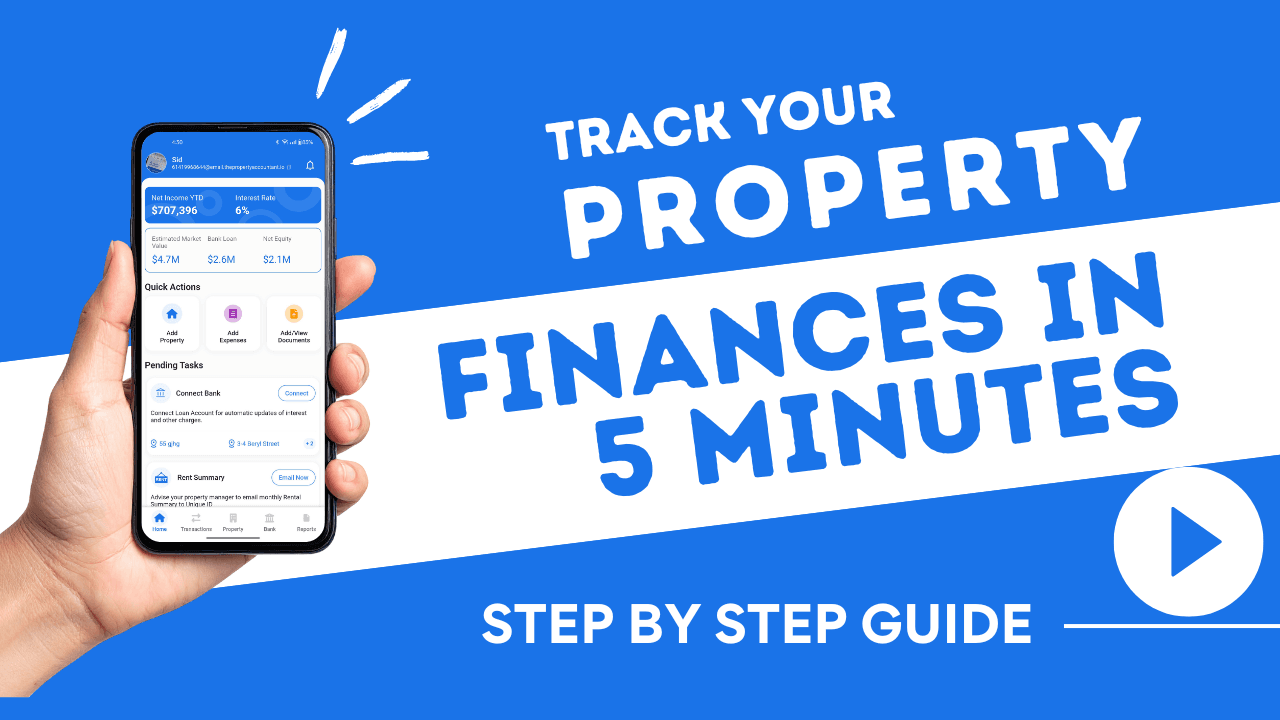
Watch the step-by-step guide and launch your automated workflow.
Owning multiple investment properties is a common goal for Australian investors looking to build long-term wealth. As portfolios grow, however, the complexity of managing tax obligations increases significantly. What works for one property often becomes ineffective when investors are managing several assets at once.
Many tax risks linked to owning multiple properties are not obvious at first. They build up gradually as information becomes scattered across spreadsheets, bank accounts, property managers, and email inboxes. Without a structured system, mistakes can remain unnoticed until tax time or, even worse, during an ATO review.
This article outlines the hidden tax risks of managing multiple properties without a system and explains why portfolio investors need better structure, visibility, and consistency to remain compliant and protect long-term returns.
Managing a single investment property usually involves one income stream, a clear set of expenses, and relatively simple record keeping. Once investors own multiple properties, each asset brings its own income, loans, depreciation schedules, and tax considerations.
Different properties may have different ownership structures, lenders, expense profiles, and rental arrangements. Without consolidation, this information becomes scattered. Tracking accuracy declines as portfolios grow, particularly when manual processes are used.
For example:
Michael owns three properties, one in his own name, one jointly with his spouse, and one held in a family trust. Each property has different loan structures, insurance policies, and property managers. When tax time arrives, he is forced to gather information from multiple email accounts, bank statements, and spreadsheets, creating a high risk of errors.
One of the most common hidden risks for portfolio investors is failing to report rental income accurately across all properties. When income is tracked manually across multiple properties, it becomes easy to overlook smaller or irregular payments.
Rental income includes more than standard rent. Insurance payouts for lost rent, short-term accommodation income, lease break fees, and tenant reimbursements must also be declared. When these amounts are received sporadically or deposited into different accounts, they're often missed.
The ATO uses data matching across banks, property managers, and insurers. Inconsistent income reporting across multiple properties increases the likelihood of reviews or audits. Even unintentional omissions can trigger scrutiny when declared income doesn't match third-party data.
Common scenario:
An investor receives $1,200 in insurance payouts for storm damage on Property 2 and $450 in early termination fees on Property 4. These amounts do not appear in the regular rental statement and are often forgotten at tax time, creating a $1,650 gap that the ATO's systems are likely to flag.
Expense management becomes more complex as portfolios expand. Investors often pay expenses from multiple accounts or credit cards, making it difficult to allocate costs accurately to the correct property.
Common errors include claiming repairs as improvements, allocating expenses to the wrong property, or incorrectly apportioning shared costs such as interest or management fees. When you're managing repairs on Property A, renovations on Property B, and routine maintenance on Property C, it's easy to miscategorize a $3,500 bathroom repair as a capital improvement instead of a deductible repair.
Over time, these issues distort tax outcomes and reduce confidence in reported figures. Misclassified expenses can also lead to overclaimed deductions, increasing the risk of ATO adjustments and penalties.
Poor record keeping is one of the most significant tax risks for investors managing multiple properties without a system. Receipts, invoices, loan statements, and depreciation schedules are often scattered across multiple locations, with some stored in emails, others in filing cabinets, and some lost entirely.
The ATO requires property records to be retained for five years. Missing documentation can result in legitimate deductions being denied during audits, even if the expense itself was valid. You might have spent $4,200 on pest treatment across your portfolio, but without the receipts, you can't claim it.
As portfolios grow, reconstructing historical records becomes increasingly difficult. When selling a property held for 8-10 years, investors often scramble to find improvement costs and CGT-relevant expenses from years ago. Using centralized property accounting software helps maintain audit-ready records year-round without the last-minute panic.
Depreciation is one of the most valuable tax benefits available to property investors, yet it's commonly underclaimed in multi-property portfolios. Each property should have its own depreciation schedule, and these schedules must be updated after renovations or capital works.
Without a system to track depreciation across the portfolio, investors may forget to include deductions for certain properties or continue using outdated schedules. For instance, if you renovated the kitchen in Property 2 three years ago but never updated the depreciation schedule, you're leaving thousands in legitimate deductions on the table.
The impact:
Missed depreciation of just $4,000 per property across a three-property portfolio costs $12,000 in deductions annually. Over ten years, that's $120,000 in unclaimed tax benefits-money that should have stayed in your pocket.
Capital gains tax is often only considered when a property is sold, but CGT calculations rely on accurate records accumulated over many years. For investors with multiple properties, maintaining consistent CGT records is essential.
Purchase costs, stamp duty, legal fees, improvement expenses, ownership changes, and periods of private use all affect CGT outcomes. Without a system, this information is often incomplete or scattered. When you sell a property held for 12 years, can you locate the conveyancing invoice from 2013? What about that $18,000 bathroom renovation in 2017?
Understanding your complete property tax obligations helps you plan ahead and avoid reconstructing records under time pressure when selling an asset. The cost basis difference between having complete records and estimating can mean tens of thousands in additional tax.
Many portfolio investors hold properties under different ownership structures-individual ownership, joint ownership, trusts, or SMSFs. Without clear systems, it becomes easy to mix income, expenses, and deductions across entities.
Example:
You claim loan interest from your trust-owned property on your individual tax return, or deduct expenses paid personally against trust income. These errors create compliance headaches that are difficult and expensive to correct after lodgement.
Incorrect allocations can lead to inaccurate tax returns and compliance issues. These mistakes also make it harder to assess true portfolio performance. Is Property A actually profitable, or are you accidentally subsidizing it with deductions from Property B?
Managing multiple properties without a system often leads to inconsistent reporting year to year. Income and expenses may fluctuate without clear explanations, depreciation may be missed or duplicated, and documentation may be incomplete.
From an ATO perspective, inconsistency increases audit risk. When your rental income from three properties drops 30% with no explanation, or your expense claims vary wildly between years, it raises red flags. Even unintentional errors can trigger reviews when figures don't align with expected patterns.
The ATO's data matching systems are sophisticated. They receive data from banks, property managers, insurance companies, and other sources. When your declared figures don't match their records, you're likely to receive correspondence-or worse, a full audit.
A structured system provides visibility across your entire property portfolio. It allows you to track income, expenses, and documents in one central location, reducing reliance on memory and manual processes.
Here's what changes with a proper system:
Systems aren't about adding complexity-they're about reducing risk and maintaining control as portfolios scale. The Property Accountant consolidates everything into one dashboard, giving you complete visibility without the spreadsheet chaos.
The most effective way to reduce hidden tax risks is to manage tax throughout the year rather than treating it as a once-a-year scramble. Investors who maintain consistent processes are far less likely to encounter issues at lodgement time.
Key steps include:
For property investors managing multiple properties, having a system in place isn't optional-it's essential for long-term compliance and financial clarity.
Moving from chaos to clarity:
Most The Property Accountant users tell us that once they upload their first few transactions, the platform becomes incredibly easy and saves hours of monthly admin. Everything stays organized without needing to revisit old documents or reconstruct data at tax time.
Managing multiple properties without a system creates hidden tax risks that often surface too late. As portfolios grow, structure and consistency become essential-not nice-to-have.
The right systems reduce errors, improve compliance, and provide confidence in your financial data. For long-term investors, putting these foundations in place early helps protect returns and supports sustainable portfolio growth.
Ready to eliminate these tax risks from your portfolio?
The Property Accountant gives you one centralized system for all your properties-automated tracking, audit-ready records, and tax-time confidence. Whether you manage two properties or twelve, everything stays organized year-round.
Start your free trial or book a quick call with our team to see how The Property Accountant can simplify your property accounting.
The Property Accountant is Australia's leading property accounting software, trusted by investors managing multi-property portfolios. Our platform automates record-keeping, centralizes documentation, and keeps you tax-compliant year-round.